How to measure windows for blinds
A steel tape, a pencil and ten minutes per window. Here's the method the big blind brands publish.
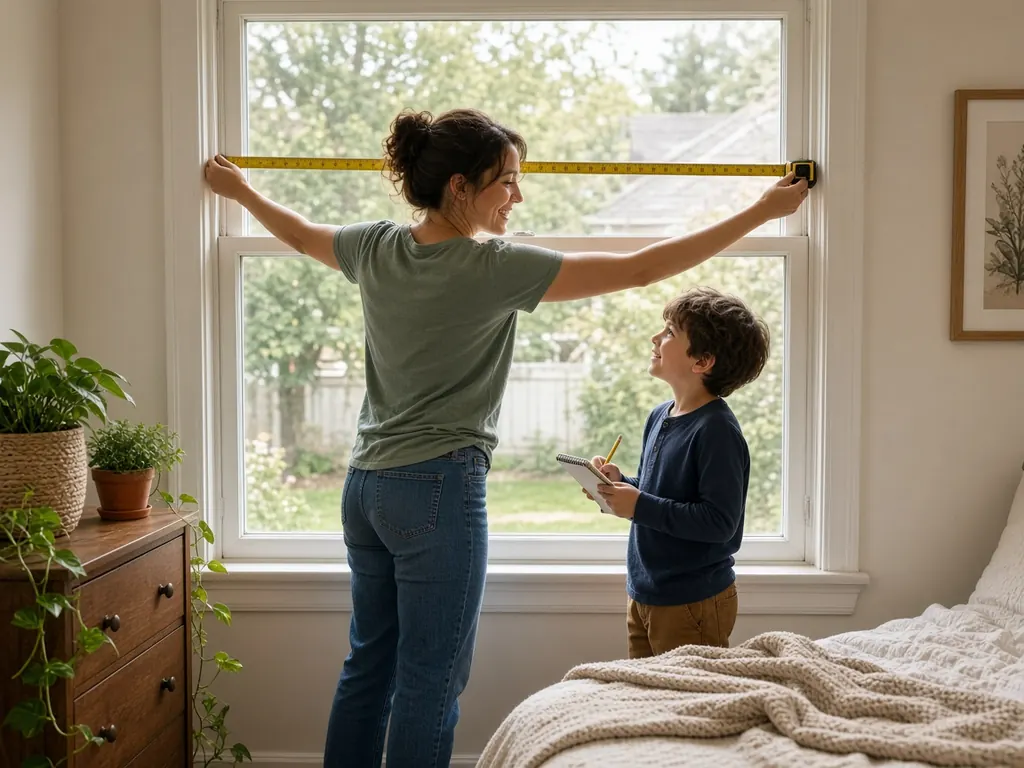
Short answer: for an inside mount, measure the width inside the frame at the top, middle and bottom and order the narrowest; measure the height at the left, center and right and order the longest; then check the recess depth.[1 · Oct 29, 2026][2 · Oct 29, 2026][3 · Oct 29, 2026] Don't take anything off: the factory makes the small clearance deduction for inside mounts.[1 · Oct 29, 2026][2 · Oct 29, 2026][3 · Oct 29, 2026] For an outside mount, measure the area you want covered and add overlap.[1 · Oct 29, 2026][2 · Oct 29, 2026]
Before you start
- Use a steel tape measure. Cloth tapes can stretch.[1 · Oct 29, 2026][3 · Oct 29, 2026]
- Measure to the nearest ⅛ in.[1 · Oct 29, 2026][2 · Oct 29, 2026]
- Measure every window, even ones that look identical. Frames that look the same often differ slightly.[1 · Oct 29, 2026][2 · Oct 29, 2026]
- Write width first, then height, and keep that order when you order.[3 · Oct 29, 2026]
- Decide on inside or outside mount first; it changes what you measure.[3 · Oct 29, 2026] Our inside vs outside mount guide explains the trade-offs.
Inside mount: the 3-point measurement
- Width, three places. Measure inside the frame from side to side at the top, the middle and the bottom. Note the narrowest.[1 · Oct 29, 2026][2 · Oct 29, 2026][3 · Oct 29, 2026] For vertical blinds, solar shades and sheer shades, one brand says to measure only across the top, where the headrail goes.[2 · Oct 29, 2026][4 · Oct 29, 2026]
- Height, three places. Measure from the top of the opening to the sill at the left, center and right. Most brands want the longest reading.[1 · Oct 29, 2026][2 · Oct 29, 2026][3 · Oct 29, 2026] Vertical blinds are the exception: order the shortest, so the vanes clear the sill.[4 · Oct 29, 2026][3 · Oct 29, 2026] Levolor says the same for its banded and sheer shades.[1 · Oct 29, 2026]
- Depth. Measure from the front edge of the frame back to the glass, or to whatever sticks out first, such as a crank, latch or handle.[2 · Oct 29, 2026][3 · Oct 29, 2026] Use the shortest reading.[1 · Oct 29, 2026][2 · Oct 29, 2026] Compare it with the product's minimum mounting depth; our blind types guide has a depth table.
- Diagonals. Measure corner to corner both ways. If the two numbers don't match, the frame is out of square, and Home Depot's guide recommends an outside mount.[3 · Oct 29, 2026]
Rounding. Two online retailers say: if a reading falls between ⅛ in marks, round the width down and the height up to the next ⅛ in.[2 · Oct 29, 2026][5 · Oct 29, 2026] Home Depot's printed guide rounds both down.[3 · Oct 29, 2026] Small difference, but follow the rules of the brand you order from.
Outside mount
- Width. Measure the area you want to cover, usually the outside edges of the trim, then add overlap on each side.[1 · Oct 29, 2026][3 · Oct 29, 2026] Published overlaps range from at least ¾ in per side (Levolor) through 1½ in (Bali, Home Depot) to at least 2½ in (Blinds.com), with more for vertical blinds and roller shades.[1 · Oct 29, 2026][6 · Oct 29, 2026][3 · Oct 29, 2026][2 · Oct 29, 2026][4 · Oct 29, 2026]
- Height. Measure from where the headrail will go down to the top of the sill, or to where you want the blind to stop.[1 · Oct 29, 2026][3 · Oct 29, 2026] Leave flat wall above the frame for brackets: at least 2 in per Home Depot, at least 3 in per Blinds.com.[7 · Oct 29, 2026][2 · Oct 29, 2026] With no sill, Blinds.com suggests running at least 2 in below the frame.[2 · Oct 29, 2026]
- No deductions. Outside-mount blinds are made to the size you order.[2 · Oct 29, 2026][4 · Oct 29, 2026]
Trim or a door handle in the way? Extension brackets or spacer blocks bring the blind forward.[1 · Oct 29, 2026][2 · Oct 29, 2026]
Write it down like this
| Reading | Inside mount | Outside mount |
|---|---|---|
| Width | Top, middle, bottom; order the narrowest[1 · Oct 29, 2026] | Area to cover plus overlap on each side[1 · Oct 29, 2026] |
| Height | Left, center, right; order the longest (verticals: shortest)[1 · Oct 29, 2026][4 · Oct 29, 2026] | Headrail position to sill or desired stop[1 · Oct 29, 2026] |
| Depth | Shortest of your readings, checked against the product's minimum[1 · Oct 29, 2026] | Not needed, but check trim and handles[1 · Oct 29, 2026] |
| Deductions | None; the factory takes them[1 · Oct 29, 2026] | None; made to exact size[2 · Oct 29, 2026] |
Have your numbers? The calculator picks the right readings, applies the rounding and checks your depth. For metric, 1 in is exactly 2.54 cm.[8 · Oct 29, 2026]
Affiliate links: if you buy through a link in this box we may earn a commission, at no extra cost to you. It does not change the sizes or sources on this page. How we handle affiliate links.
Sources: 1. Levolor, How to measure windows for blinds and shades. 2. Blinds.com, How to measure. 3. The Home Depot, Measuring the right way for window treatments (PDF). 4. Levolor, Vertical blinds technical guide (PDF). 5. SelectBlinds, How to measure for custom blinds and shades. 6. Bali, Wood, composite and faux wood blinds measuring guide (PDF, hosted by a retailer). 7. The Home Depot, Blinds category and buying notes. 8. NIST, SI units: length. Checked Oct 29, 2026. Trademarks belong to their owners; figures are restated in our own words and tables, not reproduced.